
Sleep Is Not Rest — It Is Biological Maintenance
For most of human history, sleep was understood as the absence of wakefulness — a passive state of unconsciousness that the body defaulted to when not otherwise occupied. Neuroscience has comprehensively overturned this view. Sleep is one of the most active and metabolically demanding states the brain enters. During sleep, the brain is engaged in memory consolidation, emotional processing, cellular repair, waste clearance, and hormonal regulation that cannot occur — or occur nearly as effectively — during wakefulness. The National Institute of Neurological Disorders and Stroke describes sleep as "a complex and dynamic process that affects how you function in ways scientists are now beginning to understand."
The most important recent discovery in sleep science is the glymphatic system — a network of channels surrounding brain blood vessels that functions as the brain's waste clearance mechanism. Research from the University of Rochester, published in Science in 2013, demonstrated that the glymphatic system is nearly ten times more active during sleep than during wakefulness, flushing out metabolic waste products including beta-amyloid — the protein that accumulates in the brains of Alzheimer's patients. This finding reframed sleep deprivation not merely as a performance problem but as a potential long-term neurological risk.
The Architecture of Sleep: What Happens Each Night
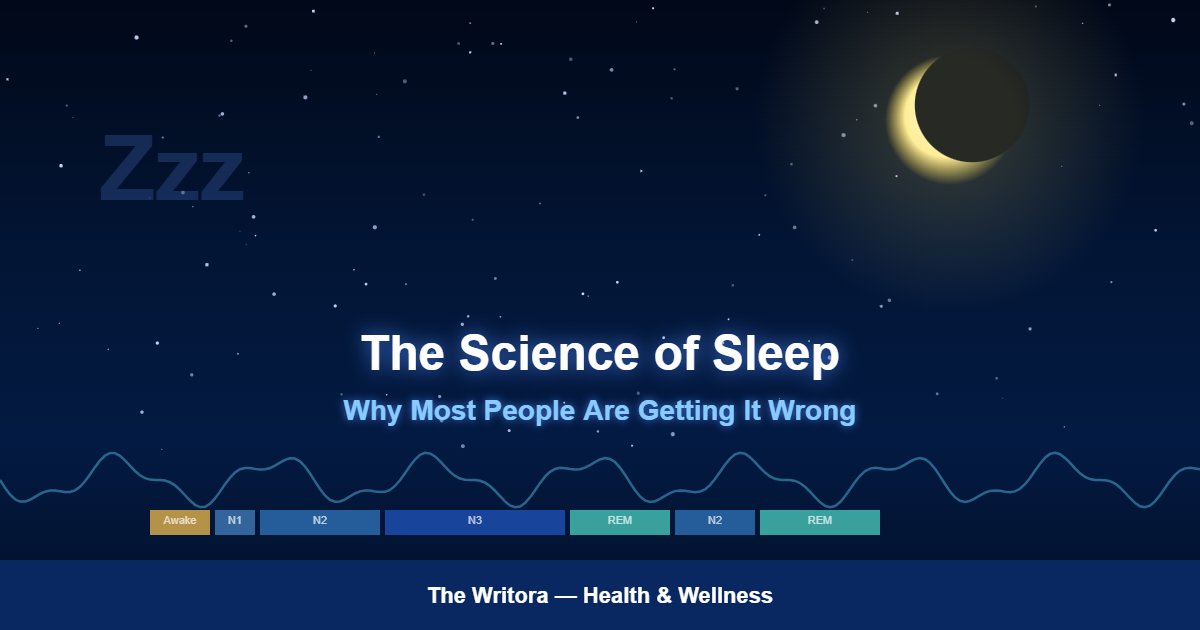
Sleep is not a uniform state. The brain cycles through distinct stages approximately every 90 minutes, each serving different biological functions. Understanding this architecture explains why total hours alone is an incomplete measure of sleep quality.
NREM Sleep: Stages 1, 2, and 3
Non-rapid eye movement (NREM) sleep comprises three stages. Stage 1 is the lightest sleep — the transition from wakefulness, lasting only a few minutes. Stage 2 is characterized by sleep spindles and K-complexes, brain wave patterns associated with memory consolidation and sensory gating (the brain's ability to filter external stimuli). Stage 3 — deep sleep or slow-wave sleep — is the most physically restorative phase. Growth hormone is predominantly released during slow-wave sleep, immune function is strengthened, and cellular repair accelerates. Slow-wave sleep is most abundant in the first half of the night, which is one reason the first four hours of sleep are disproportionately important for physical recovery.
REM Sleep and Its Critical Functions
Rapid eye movement (REM) sleep, which accounts for approximately 20–25% of total sleep time in adults, is the phase most associated with vivid dreaming, emotional memory processing, and creative insight. The brain during REM sleep shows activity patterns remarkably similar to wakefulness — a fact that led early researchers to call it "paradoxical sleep." REM sleep is concentrated in the second half of the night, which means cutting sleep short by even one or two hours disproportionately eliminates REM. The Sleep Foundation notes that REM deprivation is associated with increased emotional reactivity, impaired learning, and reduced creativity — effects that accumulate with chronic short sleeping even if the person does not feel overtly tired.
How Much Sleep Do Adults Actually Need?
The most persistent myth in sleep culture is that adults can function well on six hours. While approximately 3% of the population carries genetic variants (most notably in the DEC2 gene) that enable genuinely efficient sleep on less than seven hours, CDC data consistently shows that one-third of American adults report sleeping less than seven hours — the minimum recommended by both the American Academy of Sleep Medicine and the Sleep Research Society for adults aged 18–60. The perception that one is functioning fine on six hours is itself a symptom of sleep deprivation: sleep-deprived individuals reliably underestimate their cognitive impairment on objective performance tasks.
The Matthew Walker Problem
Sleep researcher Matthew Walker's 2017 book "Why We Sleep" brought sleep science to a mass audience and generated genuine public health benefit — but also attracted significant criticism from fellow researchers for overstating some findings. The nuanced scientific consensus, as summarized in a 2019 review in Sleep Medicine Reviews, is that the relationship between sleep duration and health outcomes is U-shaped: both chronic short sleep (under seven hours) and long sleep (over nine hours regularly) are associated with adverse health outcomes. Long sleeping may reflect underlying illness rather than causing harm. The optimal range for most adults is seven to nine hours, with individual variation within that range.
What Sleep Deprivation Does to the Body and Brain
The consequences of chronic sleep deprivation extend far beyond feeling tired. They span nearly every major physiological system and accumulate over time in ways that are not fully reversible with a single recovery night.
Cognitive Performance
After 17 hours without sleep, cognitive performance deteriorates to the equivalent of a blood alcohol concentration of 0.05% — the legal limit for driving in many countries. After 24 hours, it reaches 0.10%. Attention, working memory, decision-making, and emotional regulation are all significantly impaired. Crucially, as noted by research from the University of Pennsylvania, people who are chronically sleep-restricted adapt to their impaired performance as a new normal — they stop noticing how impaired they are.
Metabolic and Cardiovascular Effects
Chronic short sleep is associated with increased risk of obesity, type 2 diabetes, and cardiovascular disease. A 2010 meta-analysis in the European Heart Journal found that short sleep duration was associated with a 48% increased risk of coronary heart disease and a 15% increased risk of all-cause mortality. The mechanisms include disruption of cortisol and insulin regulation, increased inflammatory markers, and sympathetic nervous system activation that chronically elevates blood pressure. Sleep deprivation also increases ghrelin (the hunger hormone) and decreases leptin (the satiety hormone), creating physiological hunger that drives caloric overconsumption independent of energy needs.
Immune Function
Sleep is essential for immune function. A landmark study published in Archives of Internal Medicine found that subjects who slept fewer than seven hours per night were nearly three times more likely to develop a cold when exposed to a rhinovirus than those who slept eight or more hours. The mechanism involves cytokine production: many immune cytokines are produced primarily during sleep, and disruption reduces the body's capacity to mount effective responses to pathogens.
The Most Common Sleep Mistakes
Understanding sleep science reveals why many common behaviors actively undermine sleep quality, even when people believe they are sleeping enough.
Irregular Sleep Schedules
The body's circadian rhythm is a 24-hour biological clock entrained primarily by light exposure. Irregular sleep timing — staying up late on weekends and compensating by sleeping in — creates "social jetlag," a mismatch between biological time and social clock time. Research from Harvard's Division of Sleep Medicine shows that irregular sleep schedules are associated with worse academic performance, metabolic dysfunction, and mood dysregulation independent of total sleep hours. Maintaining consistent sleep and wake times, including on weekends, is one of the most evidence-supported sleep interventions available.
Blue Light and Evening Screen Use
The retina contains specialized photoreceptors called intrinsically photosensitive retinal ganglion cells (ipRGCs) that are most sensitive to blue-wavelength light (~480nm). These cells directly suppress melatonin production via the suprachiasmatic nucleus. Evening exposure to the blue light emitted by phones, tablets, and laptops delays melatonin onset and shifts the circadian phase, making it harder to fall asleep and reducing sleep duration. The effect is real but often overstated in popular media: a 2019 study in Current Biology found that the total light environment and timing of exposure mattered more than device use per se. Blue light filtering and device dimming in the evening are reasonable mitigations, but the more important intervention is simply reducing overall evening light exposure.
Alcohol as a Sleep Aid
Alcohol is the world's most widely used sleep aid and also one of the most counterproductive. While alcohol's sedative effects reduce sleep onset latency, it dramatically suppresses REM sleep, causes sleep fragmentation in the second half of the night as it is metabolized, and worsens sleep-disordered breathing. Even moderate alcohol consumption within four hours of bedtime measurably degrades sleep quality on objective metrics, even if the person reports feeling that they slept well.
Evidence-Based Interventions for Better Sleep
Behavioral sleep medicine has developed a robust evidence base for improving sleep quality. Cognitive Behavioral Therapy for Insomnia (CBT-I) is the first-line recommended treatment for chronic insomnia — more effective than sleeping medications in both short-term and long-term outcomes, without side effects or dependency risk.
Sleep Restriction and Stimulus Control
The two core components of CBT-I are sleep restriction and stimulus control. Sleep restriction involves temporarily limiting time in bed to actual sleep time, creating mild sleep pressure that consolidates fragmented sleep. Stimulus control involves reserving the bed exclusively for sleep and sex — avoiding reading, phone use, or work in bed — so that the bed becomes a reliable cue for sleep rather than wakefulness. These techniques produce durable improvements in sleep onset latency and sleep efficiency that persist years after treatment. The American Academy of Sleep Medicine's clinical practice guidelines recommend CBT-I as the primary treatment for chronic insomnia in adults.
Temperature, Light, and Timing
Core body temperature must drop approximately one to two degrees Celsius to initiate and maintain sleep. A bedroom temperature between 65–68°F (18–20°C) supports this thermoregulatory process for most adults. Pre-sleep hot baths or showers counterintuitively improve sleep by causing vasodilation that accelerates subsequent core temperature drop. Morning light exposure — ideally 10–30 minutes of natural outdoor light within an hour of waking — anchors the circadian rhythm more effectively than any supplement and improves both nighttime sleep timing and daytime alertness. These environmental modifications are consistently supported by the sleep research literature and have no adverse effects.
When to Seek Professional Help
Not all sleep problems respond to behavioral intervention alone. Sleep apnea — characterized by repeated breathing pauses during sleep — affects an estimated 26% of adults aged 30–70 and is dramatically underdiagnosed. Symptoms include loud snoring, morning headaches, excessive daytime sleepiness despite adequate time in bed, and frequent nighttime awakenings. Untreated sleep apnea carries significant cardiovascular and metabolic risks. Diagnosis requires a sleep study (polysomnography or home sleep testing), and treatment with CPAP (continuous positive airway pressure) is highly effective. If behavioral interventions have not improved sleep quality after several weeks of consistent application, consultation with a board-certified sleep medicine physician is the appropriate next step. The American Academy of Sleep Medicine's sleep center locator helps patients find accredited providers.
The Case for Taking Sleep Seriously
Sleep is not a lifestyle preference or a luxury — it is a biological imperative as fundamental as nutrition and exercise, and one that much of modern culture systematically undermines. The evidence is unambiguous: adults who consistently sleep seven to nine hours perform better cognitively, live longer, have lower rates of depression and anxiety, maintain healthier body weight, and have stronger immune systems than those who chronically sleep less. The interventions that produce these outcomes — consistent schedules, dark cool bedrooms, limited evening light, reduced alcohol, and CBT-I for persistent insomnia — are accessible, evidence-based, and free. The question is not whether improving sleep is worth the effort. The science has answered that question clearly. The question is whether we as individuals and as a culture will stop treating sleep deprivation as a badge of productivity and start treating it as what it is: a serious and unnecessary health risk.