
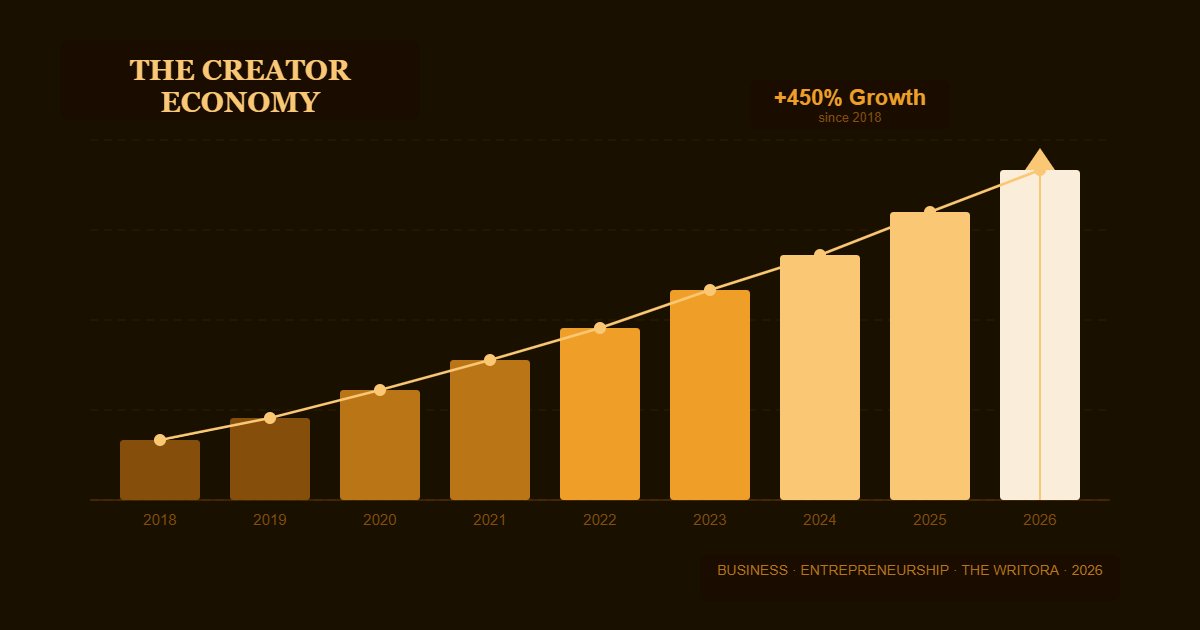
Ten years ago, "content creator" was not a job title anyone listed on a business card. Today, it describes more than 200 million people worldwide who earn some or all of their income from producing digital content — videos, newsletters, podcasts, courses, photography, and everything in between. The creator economy is no longer a side hustle sideshow. It is a structural shift in how human beings earn a living, build communities, and define professional success.
From audience to income: how the model works
At its core, the creator economy runs on a simple but powerful idea: if you can attract and retain an audience, that audience itself becomes a business asset. Platforms have built sophisticated monetisation infrastructure around this insight. YouTube serves advertising revenue back to creators based on views. Patreon allows fans to pay monthly subscriptions for exclusive content. Substack collects paid newsletter subscriptions directly. Shopify lets creators sell branded merchandise with minimal overhead. Twitch pays out a share of subscriptions and "bits" sent by viewers during live streams.
What unites all of these models is that the creator — not the publisher, studio, or corporation — sits at the centre of the value chain. The traditional media model required a gatekeeper: a publisher who decided what books got printed, a TV network that chose which shows got made. The creator economy has collapsed that gatekeeping function. Anyone with an internet connection and something worth saying can now, in theory, build a sustainable business around it.
The numbers behind the boom
The scale of the creator economy is still surprising to those who think of it as a niche phenomenon. Influencer marketing alone is now a multi-billion dollar global market, growing at double-digit rates annually. YouTube claims that more than 2 million creators earn income through its Partner Programme. Patreon supports hundreds of thousands of creators receiving ongoing payments from millions of patrons. Substack has minted multiple millionaire newsletter writers who publish from their kitchens.
Beyond advertising and subscriptions, creators have discovered that their audiences will pay for courses, coaching sessions, digital downloads, physical products, and live events. A fitness creator with 100,000 engaged followers may earn more from a single online training programme than many salaried professionals earn in a year. The leverage is extraordinary: one piece of content can generate income while its creator sleeps.
Why brands are following the money
Corporations have noticed. Brand deals — sponsorships in which a creator promotes a product or service to their audience — are now a central pillar of modern marketing strategy. Companies that once poured budgets into television spots and print advertisements are shifting spend toward creator partnerships, drawn by the authenticity and niche targeting that creators provide.
The logic is straightforward. A beauty brand running a television advertisement reaches a broad, largely uninterested audience. The same budget spent on a partnership with a trusted beauty creator reaches people who have specifically opted in to receive that creator's recommendations. Conversion rates are typically higher, and the trust transfer from creator to brand is real. Surveys consistently show that audiences trust creator recommendations more than traditional advertising.
The inequality beneath the surface
For all its democratising rhetoric, the creator economy is not equally accessible. Platform algorithms reward consistency and quality, which requires time and equipment that not everyone has. The distribution of income within the creator economy is steeply unequal — a small percentage of creators capture a disproportionate share of total revenue, while the majority struggle to generate meaningful income despite significant effort.
There is also the precarity of platform dependence. When YouTube changes its ad revenue sharing formula, or an algorithm update reduces a creator's visibility, entire incomes can evaporate overnight. Creators have learned this lesson repeatedly. The smartest among them have responded by building diversified revenue streams — newsletter lists they own, courses hosted on their own platforms, direct-to-consumer products — that reduce their exposure to any single platform's decisions.
The future of creative work
The creator economy is driving changes that extend well beyond the creators themselves. It is reshaping how we think about employment, skills, branding, and the relationship between work and identity. The notion of a single employer providing a stable career for decades is being replaced, for a growing cohort of workers, with a more fluid model in which individuals build audiences, sell expertise, and manage their own professional ecosystems.
Formal institutions are beginning to adapt. Business schools are adding courses in personal branding and creator strategy. Universities are rethinking how they teach media and communications. Financial products are emerging specifically designed for the irregular income patterns of creators — income smoothing tools, creator-specific tax guidance, and insurance products tailored to self-employed media professionals.
The creator economy is not a replacement for traditional employment, and it is not right for everyone. But it is a durable, expanding, and increasingly sophisticated sector of the global economy. For the people who figure out how to build within it, the rewards are unlike anything the old model of work could offer: independence, leverage, and the rare satisfaction of building something genuinely their own.