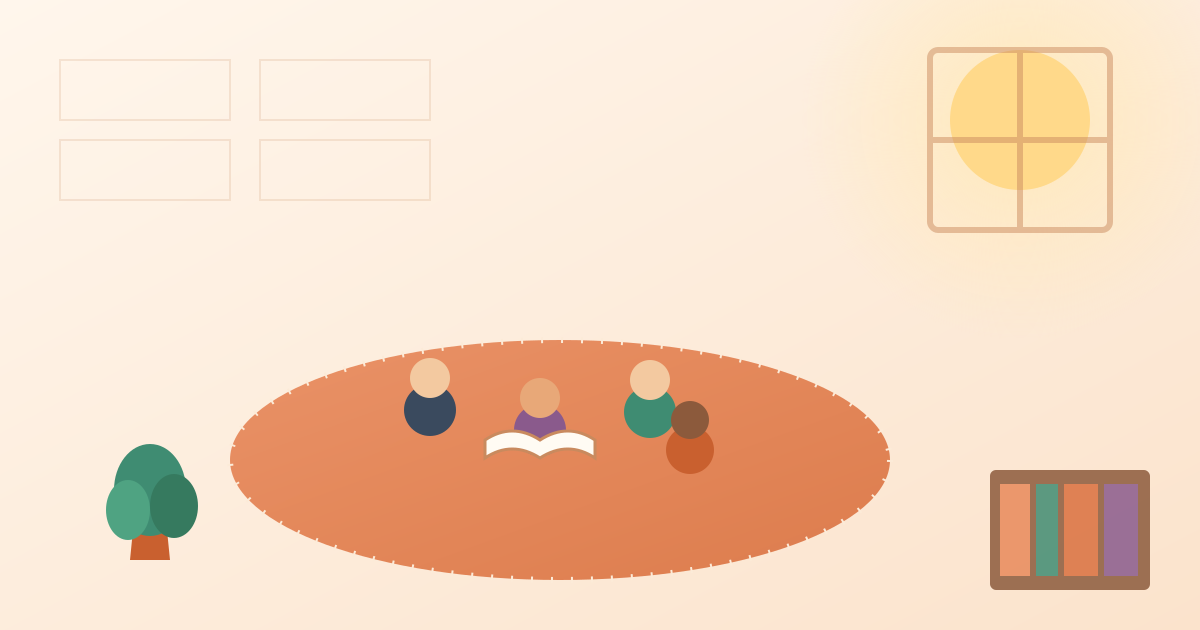
In a converted living room in suburban Ohio, nine children between the ages of six and twelve sit in a loose circle, working through math problems at three different levels. A single teacher moves between them — pausing at one cluster to ask a question, kneeling beside another child to redirect a misconception, checking silently on a third who is working ahead. There is no bell marking the transition to the next subject. There is no standardized pacing dictating that every child must be on the same page by Thursday. There is no thirty-student roster that makes individual attention a luxury instead of the norm.
This is a microschool, one of an estimated 750,000 to 2.1 million students now enrolled in models like it across the United States, according to the most comprehensive current research on the sector from the RAND Corporation, published in 2025. A year earlier, nobody had counted them comprehensively. A year before that, many of them didn't exist. What happened in between was a pandemic that closed traditional schools for months and sent millions of families improvising alternatives — and when the schools reopened, a meaningful share of those families decided not to go back.
What they built in the meantime, and what thousands more have built since, is the fastest-growing experiment in K-12 education in a generation: small, flexible, deliberately intimate learning environments that reject most of what a century of mass schooling took for granted. Understanding why this movement is growing so quickly, what the evidence actually says about whether it works, and what it costs — in money, in oversight, and in equity — is the central task of anyone trying to make sense of where American education is headed next.
What a Microschool Actually Is
The term "microschool" is slippery by design, and its advocates often prefer it that way. It covers a wide spectrum of models — pandemic learning pods that became permanent, church-hosted multi-family learning groups, educator-led alternatives to private school, and purpose-built programs with waiting lists and professional staff. What they share, according to the National Microschooling Center's 2025 Sector Analysis, drawn from surveys of 800 currently operating and pre-launch schools across all 50 states, is a small enrollment (the median was 22 students in 2025, up from 16 the year before as more experienced founders scaled their models), a deliberate rejection of age-graded classroom structure, and a commitment to individualized pacing over standardized curriculum timelines.
That breadth makes microschools genuinely hard to categorize. Some operate out of homes and run on parent-educator labor. Others are housed in commercial spaces and employ credentialed teachers. Some follow classical or Montessori frameworks; others are explicitly project-based or self-directed. Some serve primarily neurotypical students whose families wanted something different; the National Microschooling Center found that more than 74 percent of surveyed microschools report serving children with neurodiversities, and a majority serve students whose academic attainment is two or more grade levels below the conventional proficiency benchmark — not because microschools are remedial programs, but because families of children whose needs aren't being met in traditional settings tend to look hardest for alternatives.
What most microschools have in common with each other is what they don't have: the 25-to-30-student classroom, the lecture-driven delivery model, the standardized test calendar that drives curriculum decisions whether or not it serves any particular child, and the age-segregated grade structure that has defined American public schooling since the late nineteenth century.
The Problem They're Trying to Solve
To understand why microschools have grown so rapidly, you have to understand what parents are leaving — and more specifically, what the research says about why they're leaving it.
The thirty-student classroom is not a pedagogical choice. It is an economic one. A school district with a given budget can serve more students per teacher by making classrooms larger. The trade-off is attention: when one teacher is responsible for thirty children at once, the amount of individualized feedback, personalized pacing, and responsive instruction any single student can receive is sharply limited. Most classroom time in a conventional school is necessarily spent on activities that work at scale — whole-class instruction, standardized assignments, collective pacing — precisely because individual variation is a problem to be managed rather than a feature to be embraced.
The research on what happens when that ratio changes is extensive and largely unambiguous. The most rigorous evidence comes from the high-dosage tutoring literature, which has shown consistently that intensive small-group or one-on-one instruction can double or triple the amount of math students learn in a single academic year, according to multiple randomized controlled studies by the University of Chicago Education Lab. A 2024 meta-analysis of 89 studies of tutoring in literacy and math, published in the American Educational Research Journal, found academic gains equivalent to roughly three to four months of additional learning for early elementary students who received high-dosage instruction. The effect sizes are consistently among the largest found anywhere in the K-12 intervention literature.
The mechanism isn't magic. It's ratio. When a tutor or teacher is responsible for two, three, or four students instead of thirty, they can see what each child actually understands rather than what they've memorized for a test. They can address misconceptions in real time rather than after a unit assessment reveals them. They can move faster with students who are ready and slower with students who need more time — without either holding anyone back or leaving anyone behind. Microschools are essentially a structural attempt to make that ratio the rule rather than the exception.
There's a second dimension that parents describe at least as frequently as academics: the emotional texture of school. Children in thirty-student classrooms often learn early that asking questions carries social risk — that saying "I don't understand" in front of twenty-eight peers has a cost that staying quiet doesn't. The anxiety about tests, the dread of being called on when you don't know the answer, the social complexity of large-group dynamics — these are not incidental features of mass schooling, they're structural byproducts of it. In smaller environments, parents consistently report, children ask more questions, take more intellectual risks, and develop more genuine relationships with the adults guiding their learning.
The Appeal of Mixed-Age Learning
One of the most distinctive features of microschools is how many of them treat mixed-age groupings not as a logistical compromise but as an intentional design feature. In a conventional school, a seven-year-old and a nine-year-old would be in entirely different classrooms, separated by the age-grading system that solidified in American education in the 1840s under the influence of Horace Mann's adaptation of the Prussian school model. That system has been so dominant for so long that most people assume it reflects something natural about how children learn. It doesn't. It reflects what was administratively convenient when schools were designed to process large numbers of students efficiently.
Children of different ages learning together is, historically, the norm. The one-room schoolhouse that dominated rural American education until the mid-twentieth century put six-year-olds and sixteen-year-olds in the same room, and generated generations of literate, numerate adults. Apprenticeship traditions and guild structures across human history organized learning the same way. The Montessori method, which has been showing strong outcomes in educational research for decades, explicitly groups children across three-year age bands.
What mixed-age learning produces, when it works, is something that age-graded schooling makes structurally difficult: older children who consolidate and deepen their own understanding by explaining concepts to younger ones, younger children who aspire toward what they see older peers doing, and social environments that more closely resemble how human groups actually function outside of school. A twelve-year-old who helps a seven-year-old understand place value is engaged in a fundamentally different cognitive task than passively receiving instruction — one that requires them to model understanding rather than simply retrieve it.
The Evidence Gap: What We Actually Don't Know
The case for microschools as made by their advocates is compelling. The case as made by the research literature is considerably more cautious — and being honest about that difference matters enormously when public money is increasingly flowing into these models.
The most comprehensive evaluation of the microschool research base, published by the RAND Corporation in March 2025 and updated in a follow-up report in November, reached a striking conclusion: determining the academic impact of attending a microschool is, in the words of RAND senior scientist Jonathan Schweig, "nearly impossible" with currently available data. When RAND provided NWEA — one of the largest standardized testing organizations in the United States, whose MAP Growth assessment is widely used in public schools — with a list of 271 microschools compiled with the help of the National Microschooling Center, NWEA could find usable fall and spring test scores for only 10 of them. Without both a starting point and an endpoint, measuring whether students learned more or less in a microschool than they would have in a conventional school is mathematically impossible.
This data absence isn't entirely surprising. Many families choose microschools specifically because they distrust the standardized testing apparatus of conventional education. Requiring those families to participate in that apparatus as a condition of their chosen educational model creates an obvious tension with the philosophical premise of their choice. But the consequence is that the most frequently cited evidence for microschool effectiveness consists of parent satisfaction surveys, founder testimonials, and anecdotal accounts from highly motivated families who made deliberate choices and are invested in validating them. These are not worthless as signals, but they are not the same as rigorous outcome data.
The honest picture is that microschools probably work well for the specific populations that self-select into them — engaged families, children with needs that weren't being met conventionally, students who learn well in small, flexible environments with high adult attention. Whether they would produce similar results for a random sample of students across the full range of family backgrounds, learning profiles, and prior academic preparation is genuinely unknown. That distinction matters, because it determines whether microschools represent a broadly scalable improvement to American education or a premium option that delivers for the families best positioned to make it work.
The Equity Question Nobody Wants to Answer
The equity challenge facing microschools is stark, and the movement's advocates have been slower to address it than they have been to celebrate the model's pedagogical advantages.
Microschool tuition typically runs between $4,000 and $8,000 per student annually, according to current sector data. That figure sits below private school pricing but well above zero, which means that without external support, microschools are primarily accessible to families who can afford to pay it. The demographics of the sector reflect this: microschools have, to date, been disproportionately utilized by families with the income, flexibility, and cultural capital to build or navigate an alternative educational arrangement.
The equity picture is becoming more complicated, however, as Education Savings Account (ESA) programs expand rapidly across state legislatures. As of 2025, 18 states have established ESA programs, with 13 offering universal or near-universal eligibility. These accounts — which typically provide between $7,000 and $11,000 per student annually, drawn from funds that would otherwise flow to public schools — can be used directly for microschool tuition, and 38 percent of microschools now accept ESA funds, up from 32 percent the year before. Texas launched the largest ESA program in American history in 2025, with $1 billion in initial funding providing approximately $10,800 per student beginning in the 2026-27 school year. Arizona's universal program now covers nearly 10 percent of the state's student population.
Defenders of ESA expansion argue that these programs democratize access to alternatives that were previously available only to wealthy families who could pay private school tuition. Critics counter that diverting public education funding to unaccountable private providers — including microschools that, in many states, are not required to employ credentialed teachers, conduct standardized assessments, or provide civil rights protections equivalent to those in public schools — creates a parallel system with accountability gaps that fall hardest on the least protected students.
A Stateline investigation published in August 2025 put the concern directly: "Accountability can vary wildly. Some microschools aren't required to have certified teachers, conduct annual assessments, or even guarantee civil rights protections." In states like Texas, microschools can legally operate with no state registration, no teacher certification requirements, and no mandatory assessments — a degree of deregulation that gives families maximum flexibility and regulators essentially no visibility. In Illinois, Maine, Massachusetts, and Oregon, by contrast, learning groups involving multiple unrelated families can trigger childcare or private school licensing requirements that many small operations find cost-prohibitive. The regulatory patchwork doesn't just vary by state — it creates a situation where the accountability a microschool faces for how it spends public money depends almost entirely on its zip code.
The harder question underneath the regulatory debate is whether a personalized model that only affluent, well-connected families can reliably navigate is a genuine alternative to public education or a parallel track that improves outcomes for those who need less help while drawing resources away from those who need more.
What the Movement Is Forcing Public Schools to Confront
Even if microschools never serve more than a small fraction of American students — and the economics of staffing and facilities make large-scale replacement of public education implausible — the growth of the movement is generating a pressure that traditional public schools cannot entirely ignore.
The question microschools pose to conventional schooling is not really about technology, curriculum, or even teaching philosophy. It's about the fundamental tradeoffs embedded in the structure of a thirty-student classroom. How much of what happens in that room is teaching — the active, responsive, individualized transmission of knowledge and skills — and how much of it is management: keeping thirty children in the same place, on the same pace, without losing the group? The honest answer is that a substantial fraction of conventional classroom time goes to the latter, and the fraction that goes to the former is distributed so unevenly among thirty students that many of them receive very little of it.
The World Economic Forum has identified personalized and competency-based learning models among the most consequential shifts in global education systems expected over the next decade. Interestingly, the public school systems attempting versions of this — building in more flexible pacing, smaller group instruction, project-based learning — are constrained by the same economic and architectural realities that made the thirty-student classroom the default in the first place. Hiring enough teachers to bring ratios down meaningfully costs money that most public school budgets don't have. Redesigning facilities for flexible grouping requires capital that districts have spent decades deferring.
Microschools sidestep these constraints by starting from scratch, which is both their structural advantage and a reason they can't scale to the entire system without first solving the resource problem. What they can do — and are doing — is generate a data point for what education looks like when the ratio is right. Whether that data point translates into meaningful reform of public education, or simply confirms that those who can afford an alternative will continue to find one, is the open question that the movement's next decade will answer.
The Path Forward
The microschool movement is neither the solution to American education nor a temporary fad that will collapse when the novelty wears off. It is, more precisely, an experiment that has revealed something real about what concentrated adult attention does for children's learning — and exposed something uncomfortable about how rarely conventional schooling provides it.
For families considering the model, the honest calculus involves weighing genuine pedagogical advantages — individualized pacing, mixed-age learning, flexible structure, high adult-to-student ratios — against real uncertainties: limited outcome data, variable regulatory oversight, and equity questions that depend heavily on whether public funding through ESA programs is available in their state. The model works well when the educational leader is skilled, the curriculum is thoughtfully designed, and the family is genuinely engaged. It works less well when any of those three conditions is absent.
For policymakers, the movement raises questions that can't be resolved by either uncritical enthusiasm or reflexive defense of the status quo. If ESA funds are flowing to microschools, some form of accountability — assessments, credential requirements, civil rights protections — is a reasonable condition. If the research on high-dosage tutoring and small-group instruction is as robust as it appears, some version of that evidence should be finding its way into public school practice, even if replicating the microschool model at full scale is economically impossible.
And for anyone watching American education from the outside, the microschool movement is worth taking seriously not because it will replace public schooling, but because it is asking the right question: what would education look like if we designed it around the needs of each child rather than the administrative requirements of managing large groups of them?
Is your family considering a microschool or alternative education model? What questions are you weighing? Share your experience in the comments below.